
Thanks for joining me!
Things I learned from the reading…
From “The Science People Can See on Social Media”:
- Only 29% of the 30 most followed science-related Facebook pages focus on new scientific discoveries.
- The volume of posts from these science-related pages has increased in recent years, with the 15 multiplatform Facebook pages increasing by 115% since 2014.
- On Facebook-primary accounts the interaction rate is much higher than for multiplatform accounts.
- Post that include specific call to actions have particularly high interaction rates.
- A lot of science-related multiplatform accounts are more active on Twitter than on Facebook even though more adults use Facebook, than Twitter.
From “Communicating Science Online”:
- 75% of adult internet users have at least one form of social media.
- In 2006, 41% of American reported that television was their primary source of science news. In 2014, 47 % of Americans looked to the internet for science news.
- Because of algorithms used by social media in curating ads and information you see, polarization becomes a concern, meaning there become a lack of opportunity for broader discussions.
- The best social media strategy to get public engagement is using multiple platforms, such as Facebook, Twitter, and Instagram.
- Even though Facebook and Twitter are both social media platforms, Twitter is a better place for real-time conversations, while Facebook is a much slower pace and more about self-branding.

Social Media Account on Research in Mathematical Education
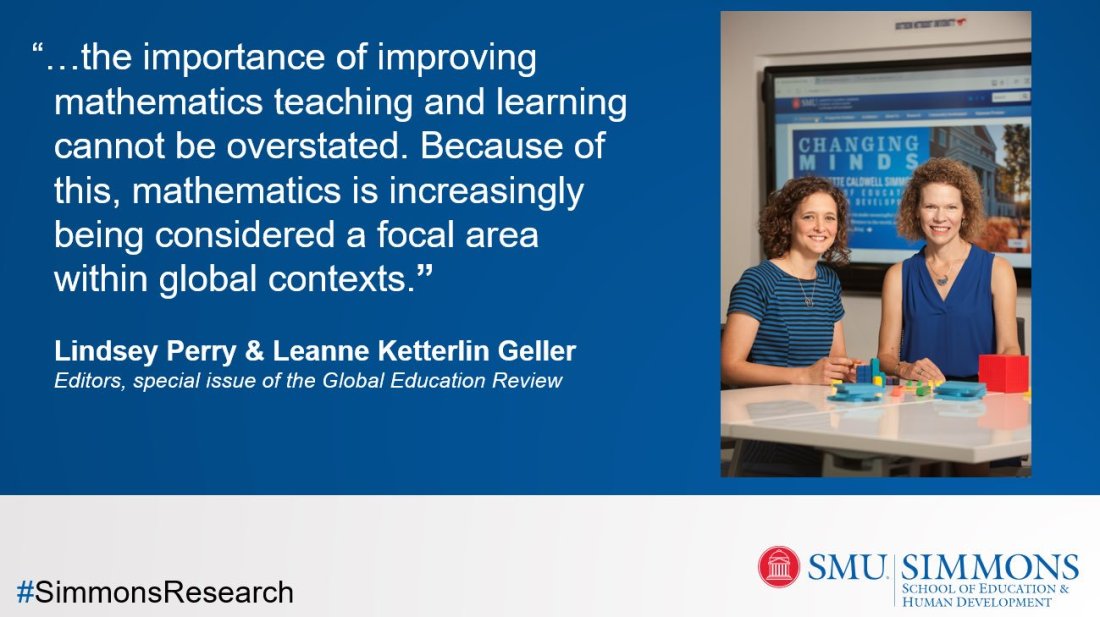
The social media account that I found was the Twitter account for Research in Math Education(RME) at Southern Methodist University(SMU) in Dallas, Texas. Their twitter account has 943 followers and they joined twitter in February of 2012. The Twitter account is run by the Research in Mathematics Education group at SMU, which is lead by Dr. Leanne Ketterlin-Geller. The research that they do is conducted by faculty and staff in the departments of Education Policy and Leadership and Teaching and Learning. On their Twitter account they are posting profiles of scientist and their research, and ads/promotions for events, research, and articles about Mathematical Education. The posts that get the most engagement are posts where they promote specific people and their involvement with RME.
The most innovative thing about their account is the fact they are making their university lead research known through social media. In this new wave of 24-hour media and social media, universities are still slightly behind on using social media to promote different programs and groups that they support. For the most part popular social media accounts to follow that are associated with the university are the main university account and the sports pages. The more academic programs that have social media accounts are harder to come by, so the fact that this research group is promoting their initiative on social media so that it is more accessible to students and the general public is a big deal. For the most part though these types of accounts and pages have low engagement because they are usually run by adults that haven’t had the experience of growing up with social media and don’t use social media in the same ways that young adults do. What they could try doing is letting a student that is involved in their research at SMU take over their account for the day and let people in on what research is like or have a Q & A session on Twitter so that their followers are more engaged with the account and they get to learn about research in Mathematics Education.
 Grace's Innovative Ideas